
Will Your Documentation Stand Up to a RADV Audit?

Medicare Advantage organizations, Payers and Providers, are facing more pressure than ever to make sure every diagnosis they submit is supported by complete, accurate documentation. As CMS continues to expand audit activity, accurate documentation has become just as important as accurate coding. Regulators are looking closely at whether submitted diagnoses are fully supported by the medical record. If they aren't, organizations may face payment recoveries, RADV audit findings, or even False Claims Act investigations.
Why This Matters
The Department of Justice has made Medicare Advantage fraud its top enforcement priority for 2026, and CMS is dramatically expanding its Risk Adjustment Data Validation (RADV) audit program.
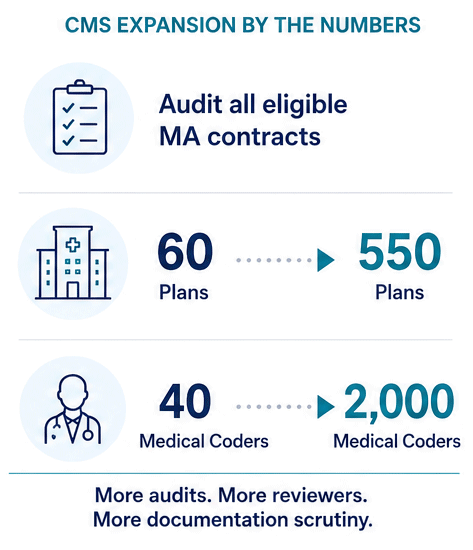
As part of this expansion, CMS plans to:
Audit all eligible Medicare Advantage contracts in newly initiated audits.
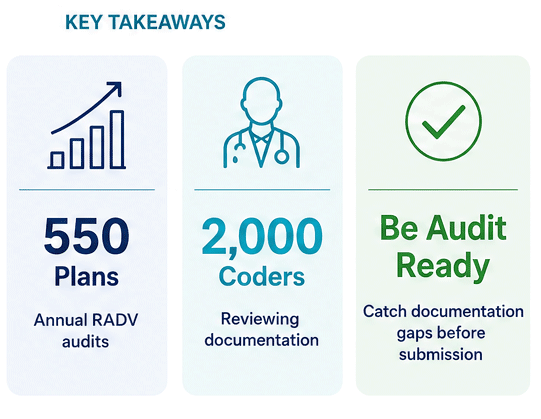
Increase annual audit volume from about 60 Medicare Advantage plans to approximately 550 plans.
Expand its medical coder staff from about 40 coders to approximately 2,000 coders.
With hundreds more health plans being audited and thousands of additional medical record reviewers evaluating submitted diagnoses, every Medicare Advantage organization should expect greater scrutiny. As CMS continues to expand audit activity, accurate documentation has become just as important as accurate coding.
Recent enforcement actions show just how serious CMS and the Department of Justice have become.
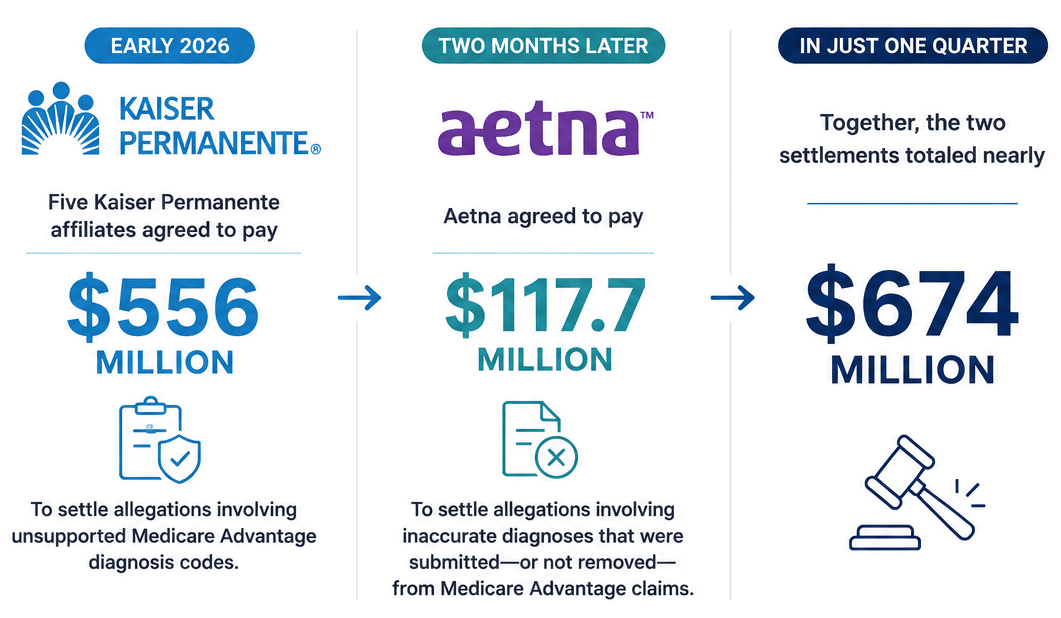
In early 2026, five Kaiser Permanente affiliates agreed to pay $556 million to settle allegations involving unsupported Medicare Advantage diagnosis codes. Just two months later, Aetna agreed to pay $117.7 million to settle similar allegations involving inaccurate diagnoses that were submitted—or not removed—from Medicare Advantage claims. Together, the two settlements totaled nearly $674 million in just one quarter. The message is clear: finding chronic conditions is important, but every diagnosis must be backed by documentation that meets CMS requirements.
The Challenge
Many healthcare organizations use AI to help identify additional HCC opportunities. That's valuable—but identifying more diagnoses is only part of the process.
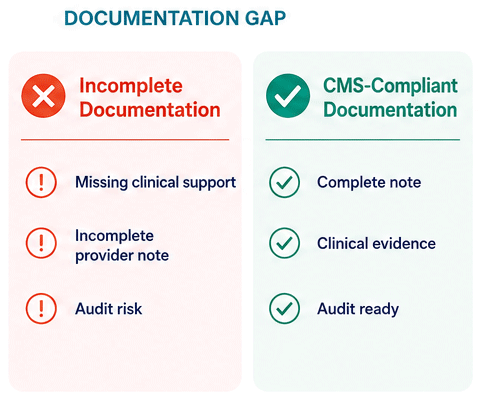
Each diagnosis must also have complete clinical documentation that clearly supports the condition. Missing or incomplete documentation can create unnecessary compliance risk, even when the diagnosis itself is correct.
How ForeSee Medical Helps
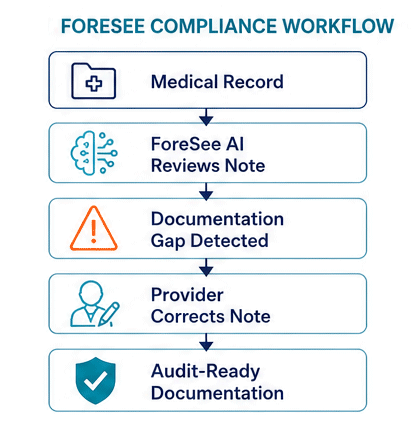
ForeSee Medical's new Compliance Module, built into ForeSee ESP®, helps both payers and providers identify and correct documentation issues before they become audit problems. The system reviews provider notes to determine whether diagnosed conditions meet CMS documentation standards. If documentation is incomplete or missing key clinical support, the Compliance Module flags the issue, alerts the payer or provider, and provides guidance to help ensure compliant documentation before claims are submitted.
This gives providers confidence that their documentation supports the diagnoses they report while helping health plans reduce unsupported diagnoses and prepare for increasing RADV scrutiny.
The Compliance Module helps organizations:
Catch documentation gaps before they become audit findings
Improve CMS-compliant documentation
Reduce unsupported diagnoses
Lower RADV audit risk
Save coders time by reducing manual chart reviews
Improve collaboration between payers and providers
Instead of discovering documentation problems months later during an audit, organizations can identify and resolve them while the medical record is still being completed.
The Bottom Line
Today's healthcare organizations need to do more than identify additional HCCs. They also need to make sure every diagnosis is supported by documentation that can withstand CMS review.
With CMS expanding RADV audits from approximately 60 plans to 550 plans annually and increasing its audit workforce from 40 to approximately 2,000 medical coders, documentation compliance has never been more important.

ForeSee Medical's AI-powered Compliance Module helps both payers and providers close documentation gaps before they become costly audit findings, giving organizations greater confidence that submitted diagnoses are complete, compliant, and audit-ready. As RADV audits continue to expand, documenting conditions correctly the first time may be one of the most effective ways to protect revenue while reducing compliance risk.
Blog by: The ForeSee Medical Team