
Large Settlement Highlights MA Documentation Risk - This Effects Payers and Providers

On August 3, 2026, the Department of Justice (DOJ) announced a $14.1 million civil settlement involving Medicare Advantage (MA) diagnosis codes that allegedly increased payments from CMS. The case was brought under the False Claims Act and was not a criminal case. The settlement resolved allegations only, with no determination of liability.
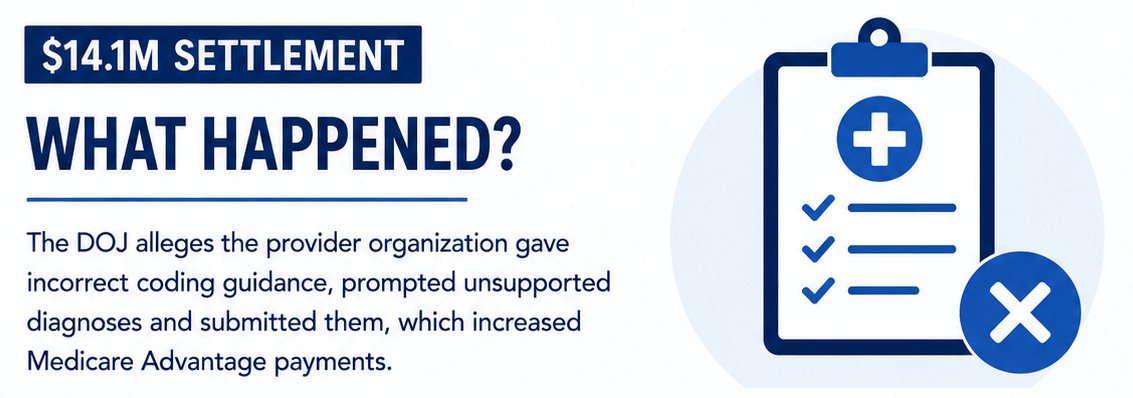
According to the DOJ, the provider organization participated in shared-risk agreements with Medicare Advantage plans. This meant higher patient risk scores could lead to higher payments for both the health plans and the provider organization.
From 2020 through 2023, the government alleged that the organization:
Gave physicians and coders incorrect guidance about how to code certain behavioral health conditions.
Had coders search patient records for additional diagnoses that could increase risk scores.
Prompted physicians to add diagnoses that were not supported by the patient's medical record or clinically justified.
Submitted diagnoses that allegedly were not properly supported or addressed as part of the patient's care.
As a result, the diagnoses allegedly led to higher Medicare Advantage payments from CMS.
The case began after a former risk adjustment professional filed a whistleblower lawsuit under the False Claims Act. The whistleblower will receive approximately $2.5 million of the federal recovery.
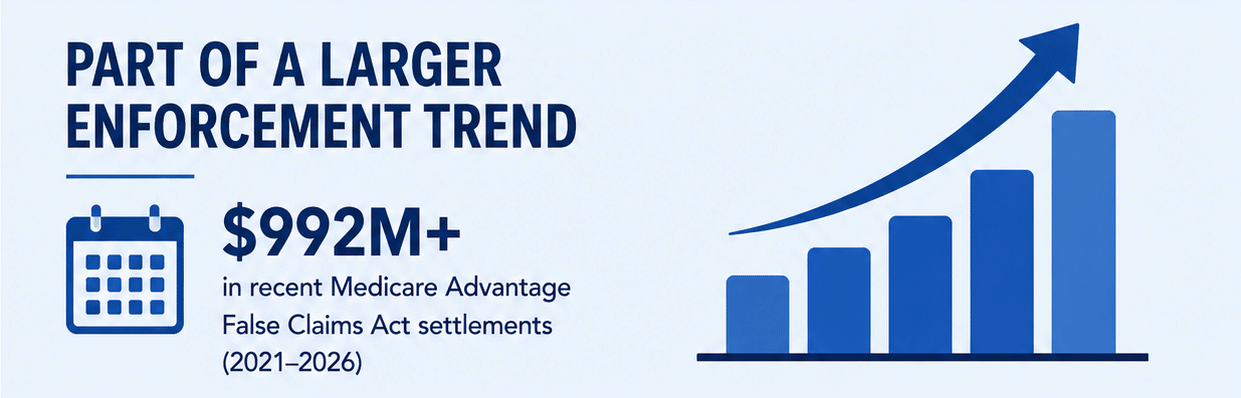
This is not an isolated case. Several recent civil False Claims Act settlements have involved Medicare Advantage risk adjustment:
January 2026 — $556 million: Allegations involving invalid diagnosis codes submitted for MA members.
March 2026 — $117.7 million: Allegations involving inaccurate diagnoses that were submitted or not removed.
June 2026 — $56.5 million: Allegations involving false or invalid diagnosis codes.
September 2023 — $172.3 million: Allegations involving inaccurate diagnoses, including diagnoses from in-home assessments.
August 2021 — $90 million: Allegations involving unsupported diagnosis codes that increased MA payments.
The message for health plans and provider organizations is clear: finding an HCC is not enough. The diagnosis must also be supported by the patient's medical record.
Strong Documentation Matters
The recent case highlights an important risk in the HCC process. A possible diagnosis may be identified, but that does not mean it should automatically be added to the patient's record.
Before a diagnosis affects risk-adjusted payments, organizations should be able to answer a few basic questions:
Is the diagnosis supported by clinical evidence?
Does the medical record support the provider's diagnosis?
Was the condition properly documented and addressed?
Can unsupported diagnoses be identified before they are submitted?
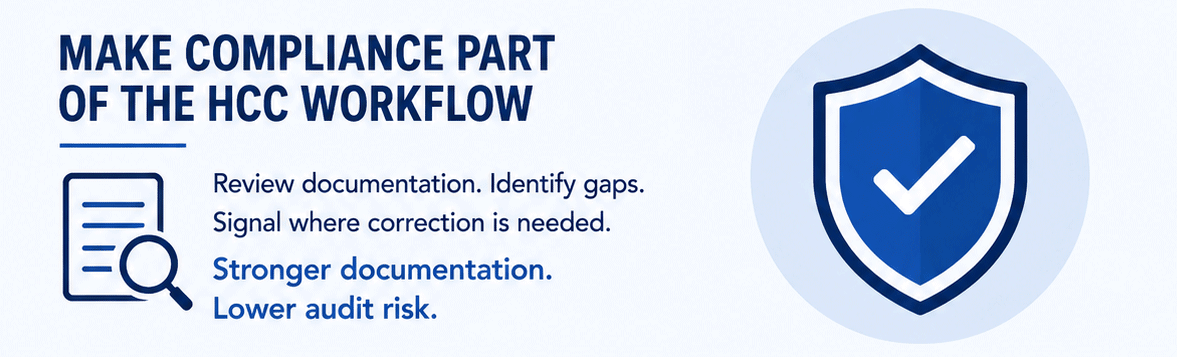
Accurate risk adjustment is about more than finding potential HCCs. Organizations also need to make sure every diagnosis is supported by complete, CMS-compliant documentation. ForeSee Medical's new Compliance Module helps make compliance part of the everyday HCC workflow. Integrated with ForeSee ESP®, it reviews documentation at the chart-note level, identifies potential gaps and signals when documentation may need to be corrected. Instead of discovering documentation problems during an audit, organizations can address them earlier.
Capture the right conditions. Support them with strong documentation. Stay audit-ready.
Blog by: The ForeSee Medical Team